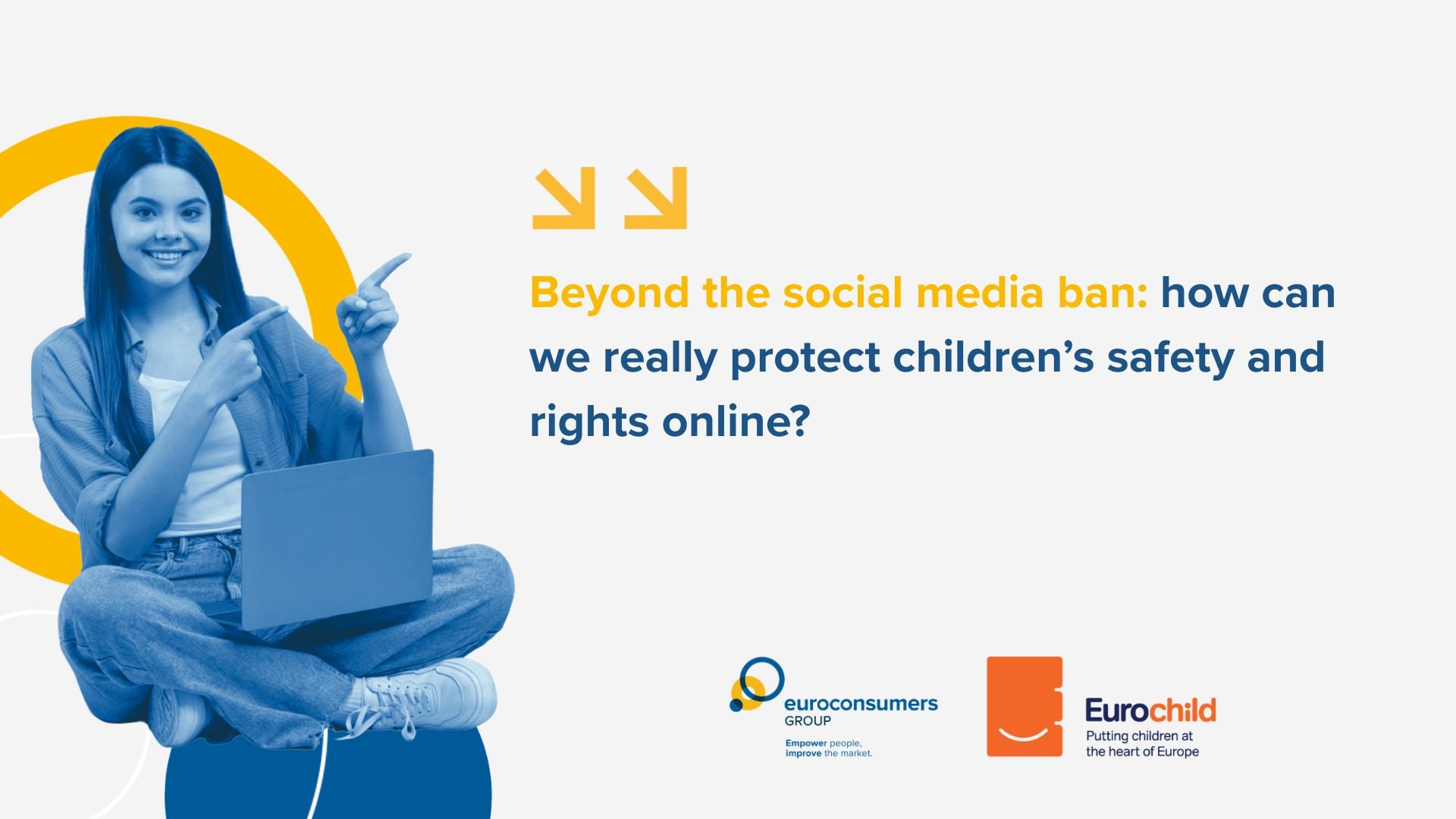
Ten recommendations to make social media safe without resorting to a social media ban
- (Re)enforce what we already have: make it a priority to enforce provisions in the Digital Services Act, AI Act, GDPR, and Audiovisual Media Services Directive that already protect children.
- A higher age limit by itself will not solve the problem: the core question is not just what the age limit should be, but whether effective measures are in place to provide age-appropriate, rights-respecting and safe-by-design services for all children.
- Open the data, build the trust: give researchers access to platform data to allow for proper independent scientific scrutiny and support evidence-based policy.
- Make “safe-by-design” the legal default for all digital services accessible to children: this includes stronger privacy settings, filtering if inappropriate content, and switching off manipulative design choices. If a feature only works by keeping users hooked, it shouldn’t be on by default.
- Empower choice, eliminate manipulation: design recommendation systems that respect children’s preferences by helping children define for themselves what they want to explore and enjoy online. In addition, the Digital Fairness Act should prohibit behavioral advertising for children for all traders.
- Slowing things down: Introduce “positive friction” in children’s accounts, such as “think before you share” prompts or limits on reshares, to help young users manage their time and behaviour more consciously.
- Help on hand: Children should have access to clear, accessible and child-friendly reporting and support channels where platforms respond within clear timeframes, explain what action has been taken and cooperate with trusted helplines, hotlines and support services.
- Age verification as a tool, not the full solution: age verification must be necessary, proportionate, privacy-friendly, robust, non-discriminatory and transparent. It should not be used as a one-size-fits-all answer to children’s rights and data protection.
- The digital environment should be age appropriate: All children under 18 should benefit from a high level of protection online. However, safeguards should reflect children’s evolving capacities which means age-appropriate safeguards across the whole under-18 spectrum, not a single cut-off that treats all children the same.
- Shape the rules together with children: Children should be directly involved in designing policies that affect their digital lives. We know from Euroconsumers’ national dialogues and our multi-country survey that minors are not just passive users, but have clear, thoughtful and often very practical views on what works and what doesn’t.
This is a summarised list, you can find the full recommendations ‘Beyond the Ban: What can really protect children’s safety and rights online?’ here.
What do young people think about the social media ban and their lives online?
The recommendations came from a roundtable co-hosted with Eurochild, a network of over 200 organizations and individuals working with and for children in Europe. At the event, we brought evidence from young people to the table to show how experience and view the benefits and challenges of lives lived online.
The event heard from Martin Harris Hess, Head of Sector for Protection of Minors Online at DG Connect, Euroconsumers’ Els Bruggeman and Mieke Schuurman, Director of Child Rights and Capacity Building at Eurochild.
The discussion with participants including policymakers, child rights advocates, experts and some tech platforms encouraged a broader approach to online safety, emphasizing safety‑by‑design, stronger platform responsibility, and better risk management instead of a narrow focus on a single measure.
It is the latest step in Euroconsumers’ commitment to nurturing a young-person centered conversation about what they want from their online future. We have consistently sought out ways to ensure the voices of young internet users are part of the policy debates that will decide their future digital experiences.
Here’s more details on the ways that Euroconsumers and its members have opened up a dialogue with young people across Europe which we have shared with policy makers to consider proposals like social media bans in the context of young people’s real lives online:
Growing up online survey: Building a digital future for minors, by minors
In late 2025, Euroconsumers surveyed 3,351 teenagers aged 12–17 from Belgium, Italy, Spain, Portugal and Poland to address a major gap in public debates about their digital future.
The survey of their experiences, concerns and ideas for the future found:
- For young people, the internet is a gateway to new knowledge and skills, a practical tool, a source of creativity and a hive of social connection. But 46% of those surveyed reported they had encountered some type of threat online.
- Over half (57%) believe algorithms encourage them to spend more time on social media than they intended,
- Default features got support, 64% thought features like blurring inappropriate content would be useful, and 53% supported having specific default settings for minors’ accounts.
- Most importantly, young people make a powerful call to be heard. They envisioned a holistic approach: intelligent regulation, accountable platforms, supportive parenting and meaningful youth empowerment and engagement.
National dialogues: young people speak out on social media bans and their digital future
We followed up with a series of national events with young people. Across our members in Italy, Spain, Portugal and Belgium, over 200 teenagers joined roundtables and workshops to openly debate the risks and opportunities of their digital worlds. You can see their input in this short video.
They told us how much they value online platforms for helping them stay connected with friends and family, listen to music, share photos and memories, follow the news, learn new things and create images. But they wanted platforms to do more to protect and empower young users.
Their practical suggestions for creating a safer digital space included having better reporting channels, banning smartphones in schools, turning off infinite scrolling, blocking messages from strangers, requiring explicit prompts about user preferences and time limits on gaming.
Teens take on social media bans and digital fairness
We carried on the conversation with a public deep dive into how young people felt about lives online when we partnered with the European Youth Press at our Start Talking webinar in January 2026 called Teens’ take on Digital Fairness.
The young participants discussed their views on the growing trend of age limits for social media: