
News
27.02.2026
CICLE-X: making the complaints system faster, stronger and easier for consu...
CICLE-X: making the complaints system faster, stronger and easier for consumers.
Read More


The strength of consumer protections rules in the European Union is being let down by fragmented and inconsistent enforcement.
The Consumer Protection Co-operation (CPC) Regulation provides a cross-border framework to tackle consumer law infringements that affect millions of consumers in the EU single market.
But it is routinely failing consumers with a system that lacks precisely the bite and co-ordination between member states that it was set up to deliver. And that is costing consumers’ trust in the laws that are meant to protect and empower them in the market.
Euroconsumers latest position paper A Quantum Leap for European Consumer Enforcement is based on the first hand experience of our members who have raised complaints with national consumer authorities and our experience as a group through the CPC framework. It sets out four priority areas for change.
These are the urgent actions needed to make cross-border consumer protection do its job and increase consumer trust in the system:
1. Direct enforcement powers for the European Commission
Giving the European Commission direct enforcement powers to take the lead on addressing high-impact, Union-wide infringements will speed up and strengthen action, and leave national consumer authorities to deal with cases below that threshold.
Commission leadership can be triggered by cases: with an obvious EU-wide dimension; where fragmented action risks contradictory outcomes; where third country traders are involved; or where speed and consistency is essential (eg AI-generated misinformation).
Making the Unfair Commercial Practices Directive (UCPD) into a Regulation is another route to enable more consistency and would work effectively with a centrally led European enforcement power.
2. Modernising and reinforcing the CPC system
Updating and standardising procedures and remedies in the CPC framework can help deliver more timely, effective and consistent protection. We’d like to see standardised remedies across countries which would avoid different treatment for consumers in different EU member states. To get on top of online practices that quickly gather pace, we’d like fast-track procedures for widespread but short-lived infringements.
Finally, binding trader commitments accompanied by better monitoring and feedback to the organisations who raised the original alert will help make remedies stick and make outcomes and progress visible to all.
3. Structured stakeholder communication and engagement
As our case studies below show, consumer organisations have a critical role in gathering evidence and submitting alerts, but there’s no obligation on the CPC Network to keep them informed of progress and outcomes.
This information and transparency gap can be filled by: structured feedback loops throughout enforcement proceedings; complainant organisations being involved in the procedure, including information on how harm was quantified and commitments monitored, and better public communication about the impact of CPC actions. All these things would strengthen the deterrent effect of enforcement and improve consumer trust.
4. Public enforcement as a gateway to private redress
Public and private enforcement can be mutually reinforcing by increasing deterrence and getting redress directly to consumers. Successful follow on actions have come about in competition law cases where a finding has been made against a company which is then subject to a collective redress claim.
This should also apply in consumer law enforcement. Euroconsumers wants CPC enforcement decisions to indicate and quantify the harm experienced by EU citizens, so those affected can go on to get redress through collective proceedings.
Euroconsumers has brought several complaints on behalf of consumers across Europe to the CPC network, together they tell a story of a system that is falling short:
1. Ryanair exploiting structural flaws: Belgian member Testachats initiated injunction proceedings against Ryanair after it received no response to three complaints filed with the national authority about the airlines commercial practices. Ryanair’s legal team exploited the public authority’s delay by requesting a suspension of the injunction as a public investigation was pending.
The court rejected this request, but it shows a clear structural flaw: the absence of feedback obligations in the CPC Regulation can be actively weaponised by defendants to delay and obstruct private enforcement proceedings.
2. Stellantis AdBlue delays: it took two years for the CPC to take action after Euroconsumers’ cross-border consumer complaint data identified malfunctions in Stellantis’ AdBlue anti-pollution systems, and the manufacturer directing them to replace entire tanks at their own expense.
Altroconsumo and OCU alerted authorities in Italy and Spain in December 2022 and notified the CPC network, stressing the issue was Europe‑wide. The CPC network did not act, and only Italy’s AGCM opened proceedings. Attempts by Euroconsumers’ organisations in other countries to engage Stellantis went unanswered.
Euroconsumers later returned to the CPC with monitoring reports, leading to Stellantis’ commitments in December 2024 – two years after the first alert. The compensation mechanism launched in January 2025 proved ineffective, prompting another letter to Stellantis in March 2025.
The lack of a structured process to monitor implementation and report back to the organisations that originally raised the alert obscures what is happening, slows down resolution and redress for consumers and allows the unlawful practice to continue.
3. Budget airline hand luggage leads to contradictory decisions across the single market: charges for the accepted and protected practice of taking hand luggage into the cabin is an issue affecting every budget airline passenger in Europe.
Euroconsumers’ organisations have taken action with national authorities who have reached very different conclusions. Spain fined four airlines €150 million after OCU’s complaint and ordered the fees to end. Italy judged the same practice legal. In Belgium, Testachats is still waiting for a ruling on complaints lodged last year.
One identical business practice by three different airlines, challenged in three different countries, and three different national authorities delivering three different outcomes. Confused? European consumers certainly are.
Euroconsumers’ efforts to stop consumer harm through the existing CPC framework have been frustrated by companies who play delays and structural flaws to their advantage.
Els Bruggeman, Group Lead Policy and Enforcement
The examples of cases show fragmentation, delay, slowness and no structural feedback loops. We can add to this inconsistent fines at too low a level to be a deterrent and gaps in capacity across different national authorities meaning priorities are different everywhere. Finally, there’s a more general lack of digital capacity and expertise to identify and quantify infringements or subsequently monitor remedies amongst national authorities.
Meeting all of the challenges of enforcing consumer protection law across a single market of 450 million consumers will take action across all national and Commission level institutions.
Reforming the CPC Regulation is an essential start to show that Europe means business when it comes to rigorously enforcing the laws it so carefully crafts and growing the trust needed to make markets function and thrive.
Clearer procedures mean better enforcement and better enforcement means real outcomes for consumers. Consumers who feel protected engage confidently in digital markets, and businesses that play by the rules know they won’t be undercut by those who refuse.
Consumer trust is not a ‘nice to have’, it is a foundation of European competitiveness. Consistent, visible enforcement builds that trust, and is therefore not a technical afterthought; it is the engine that makes the entire consumer acquis meaningful.
The goal is clear: put a stop to fragmented, slow and inconsistent enforcement outcomes. Giving the European Commission direct enforcement powers for high-impact, Union-wide infringements should be one of the key priorities of this reform. A quantum leap in enforcement starts here.
Share:


CICLE-X: making the complaints system faster, stronger and easier for consumers.
Read More
Euroconsumers members played a pivotal role in getting compensation for consumers wrongly charged for replacing their faulty AdBlue tanks. We’ll keep a close eye on Stellantis’...
Read More
It is the International Day of Democracy. Citizens, institutions, elections, rights: the serious stuff. So why should we talk about consumers today too?
Read More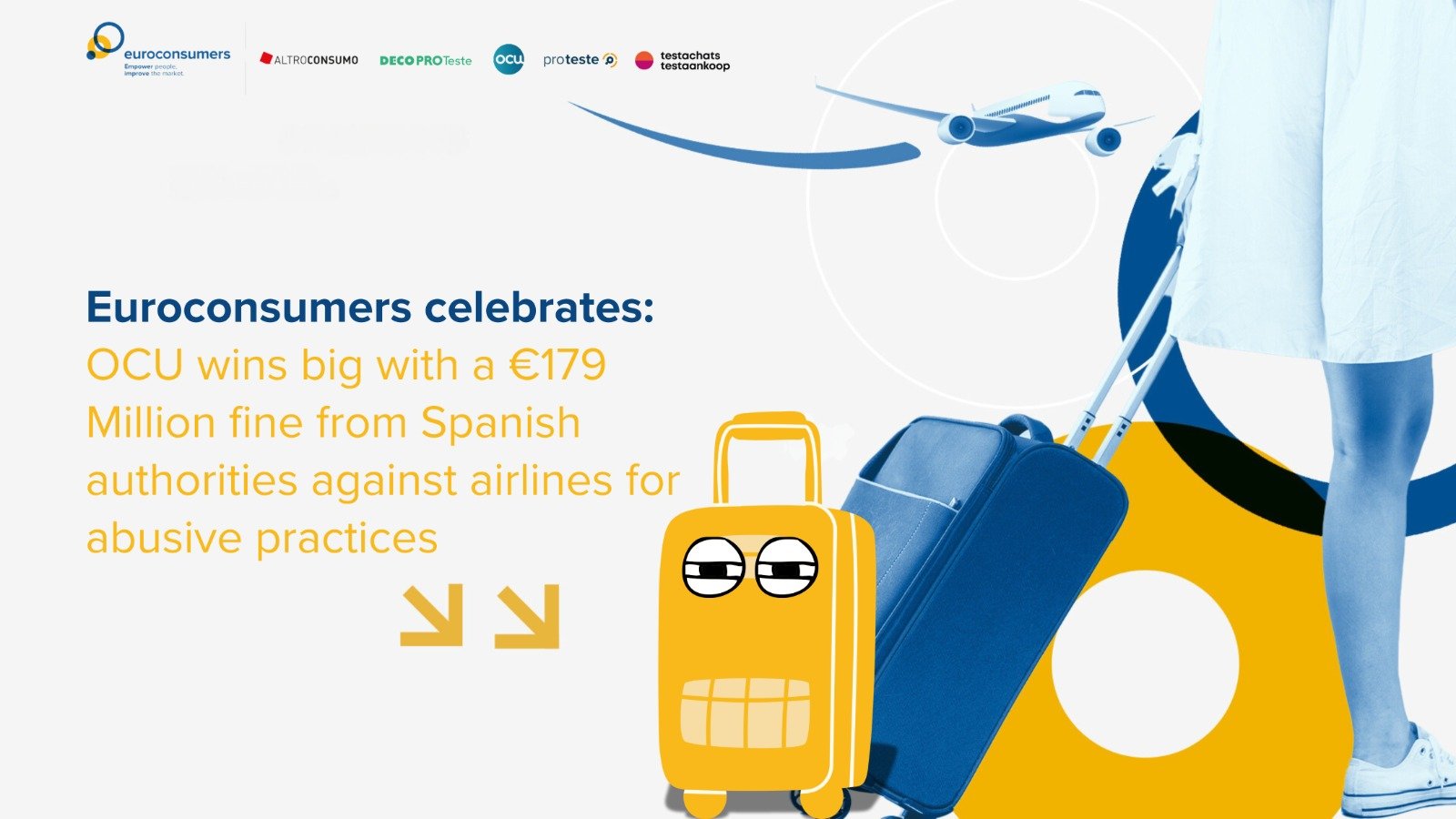
Victory for passengers! After a complaint made by Euroconsumers’ member OCU, The Spanish Consumer Authority just handed Ryanair, EasyJet, Vueling, Norwegian, and Volotea a massiv...
Read More