Software obsolescence: coming for your cars
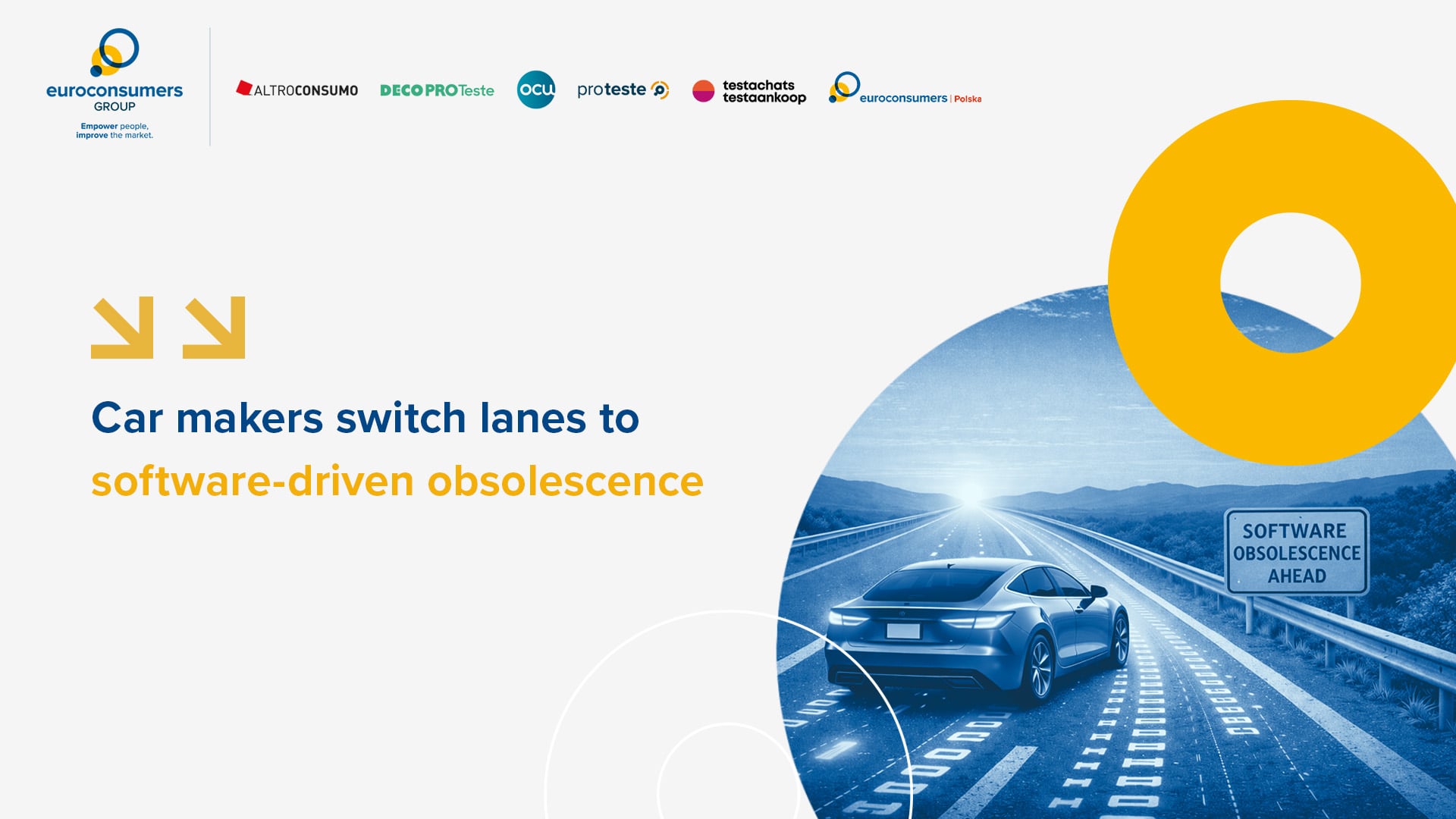
The Audi case suggests that software obsolescence as a profit motive is now taking root across the growing number of products relying on apps or cloud-based services to function, like smart home appliances, TVs and now cars.
Getting to grips with the scale of the practice in the auto industry is not easy. Initial spot checks on some other vehicle brands including Volvo, Kia and VW found that terms and conditions for software and app support differ depending on the model of car and even the version.
Checks revealed that it was common practice to limit the car’s connectivity with smartphone apps over time. However, other brands like Lynk & Co offer the full connectivity option for life, showing that this is a commercial choice made by brands.
Of course, the time-limitations of free software licensing and support is usually stated somewhere in the point-of-sale documentation– but is informing consumers of this unfair and costly practice enough?
Our legal teams are reviewing the legal framework regarding subscriptions for new cars to determine if it is fit for purpose in an increasingly connected world.
Can consumers be empowered to use connected products on their terms?
Smart connected products including vehicles promised to empower consumers with information, convenience and personalisation, but until clearer rules are set out some companies will continue to hold consumers to ransom.
Our position paper pointed out gaps in policy that are enabling software obsolescence to take hold despite a clear overall direction towards keeping all products, connected or not, in use for as long as possible.
Existing legislation can address misleading practices or ensure basic functionality, but there is currently no binding EU-wide minimum duration for software support.
There are also unresolved questions about what digital ownership means in practice in the connected age. In many cases, consumers only hold a licence to use the software in a product, which can be revoked or restricted by the provider. The result is that even products which are still supported can become unusable if access is withdrawn.
This has parallels with aspects of the right to repair and the permissions to use third party access. In this scenario, third party providers might be used to reinstate the access that the original provider had revoked. Does ‘ownership’ of a product allow someone to hack their car to get it working again by buying a service to unblock features?
Until these gaps and key questions are addressed with clear and enforceable rules, both on minimum support periods and on consumer rights to digital products, consumers will remain vulnerable to premature, software-driven obsolescence.