Digital policy debates overflow with information, ideas and opinions – yet too often the voices of the young people most affected are left unheard.
Euroconsumers believes no matter how young you are, your voice matters and has been working to ensure that young consumers’ perspectives are represented in policy developments.
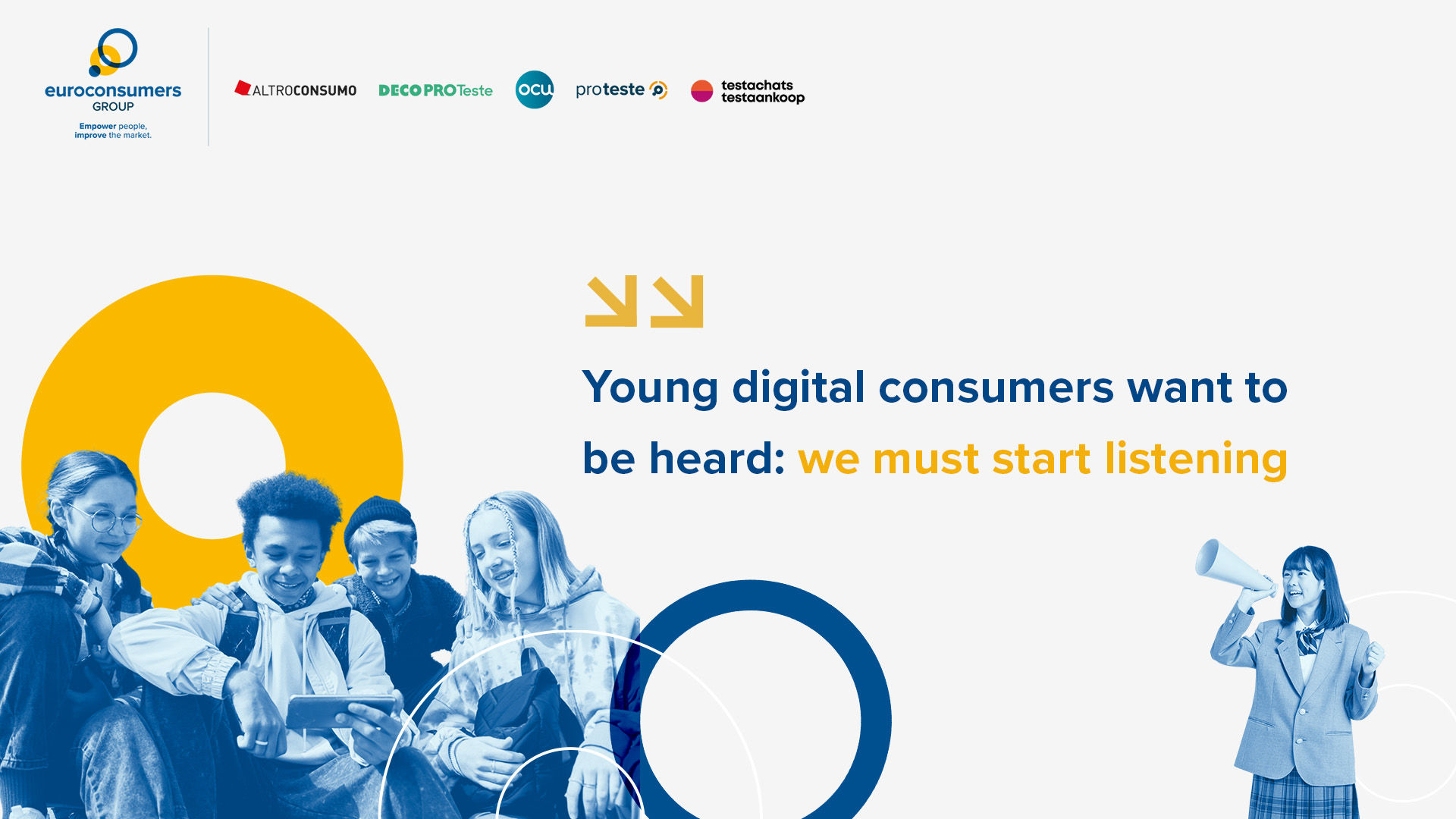
Young people want to be heard
In 2025, we ran a survey with 3,351 teenagers aged 12–17 across Belgium, Italy, Spain, Portugal and Poland and heard about their experiences, concerns and ideas for the future.
We followed up with a series of national events where young people came together to openly debate the risks and opportunities of their digital worlds:
- Altroconsumo, our member in Italy, brought together 120 students aged between 14 and 16 in Milan to discuss issues with the help of content creator Alessio Rubino. They enjoyed the way online networks helped them stay in touch with people, listen to music, share photos and memories, read news, learn new things, call parents and create images.
- However, they were clear on practical ideas for how to make the environment safer including: blurring explicit content, support channels to report inappropriate content, banning smartphones at schools, deactivating infinite scrolling and video autoplay, age limits for social media account, blocking messages from strangers, explicit requests on what you like,“think before you share” pop ups and limits to time spent gaming.
- In Belgium, Testachats/Testaankoop organised a round table with the Minister of Digital Affairs, Vanessa Matz and a class of students aged 15-16 years. Their debate centred on the question of age limits for social networks, an issue which is rising up the policy agenda.
- What came through loud and clear is that more needs to be done to make sure young people can freely experience a digital space that truly makes them feel good. Italian and Belgians alike agreed that platforms could do a lot more to protect and empower young users to stay connected and have the best experience they can.
- In Portugal, our member DECO PROteste brought the session to school students where they could express their views on how they believe their internet use should be monitored or supported. And in Spain, young people aged between 12 and 17 participated in three focus groups hosted by OCU. They were asked to discuss which they think need to be taken to make the internet genuinely safe for everyone alongside experts and decision-makers in youth policy, child psychology and internet safety, including the Secretary of the Ministry for Youth and Children and the first Ombudsman for Children in Spain and representatives of schools, parents and technology companies.
Taking young people’s messages to the policy makers
Euroconsumers brought these messages to the panel ‘Europe’s race to a minor-proof digital future’ with DOT Europe, TikTok, DGJust and 5Rights at the Euroconsumers Forum 2025.
We shared their demands: teens want the ability to shape their own digital experience and to know they can rely on built-in protective measures to navigate online spaces safely and confidently.
Young people are skeptical about blanket social media bans
As policy makers race to find solutions to better protect children online, they need to listen carefully to minors’ views.
Last week’s decision from the Australian government to stop anyone under 16 from having a social media account from this week has frustrated many young people who see it as a blunt instrument that disregards their rights.
In Europe, national governments including France and Belgium are also considering social media bans to combat serious concerns about excessive screen time and harmful content, and last month the European Parliament endorsed a 16+ age restriction for social media.
But our survey and national discussions found that young people think severely restricting access risks cutting them off from the value of connection and creativity – while simultaneously letting platforms off the hook when it comes to fostering safer spaces for younger users.